The 72-Hour Marketing Framework: How Challenger Brands Get Results Fast
When you're a challenger brand, you don't have the luxury of six-month marketing campaigns or endless budget cycles. You need results fast, and you need them to count. That's where the 72-Hour Marketing Framework comes in: a rapid-fire approach that transforms marketing ideas into measurable impact within three days.
This isn't about cutting corners or hoping for viral luck. It's about strategic speed, focusing your efforts where they'll make the biggest impact, and creating momentum that propels your brand forward whilst your competitors are still scheduling meetings.
Why 72 Hours Matters for Challenger Brands
Challenger brands operate in a different reality. You're competing against established players with deeper pockets, longer customer relationships, and market recognition that's taken decades to build. Your advantage? Speed and agility.
The 72-hour timeframe isn't arbitrary. It's long enough to execute meaningful marketing initiatives whilst short enough to maintain urgency and focus. It prevents the perfectionism paralysis that kills many promising campaigns and forces you to prioritise what truly matters.
More importantly, 72 hours allows you to test, learn, and pivot before your competition even notices you're moving. In today's fast-paced market, being first matters more than being perfect.
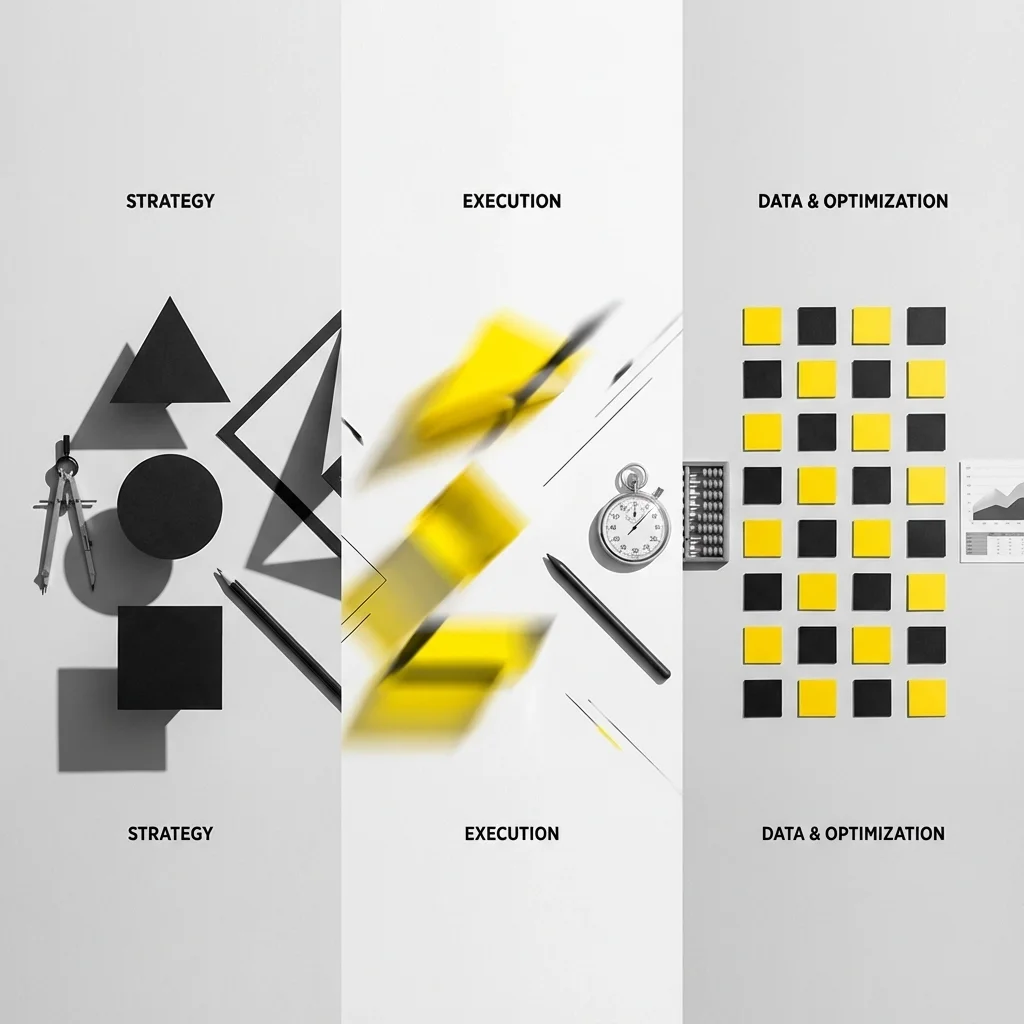
The Three-Phase Framework Breakdown
Phase 1: Hours 0-24 - Intelligence & Strategy Sprint
The first 24 hours are about laser-focused intelligence gathering and strategic positioning. This isn't about lengthy market research: it's about identifying the specific opportunity you're going to exploit.
Hour 0-6: Market Opportunity Identification
Start by identifying the gap your competitors have left open. This could be an underserved customer segment, a messaging blind spot, or a channel they're ignoring. Use social listening tools to understand what customers are saying about your industry. Check competitor websites, social media, and recent campaigns to spot weaknesses.
Hour 6-12: Audience Deep-Dive
Define your target audience with surgical precision. Create detailed personas, but focus on their immediate pain points and decision-making triggers. Where do they spend time online? What content do they consume? What influences their purchasing decisions right now?
Hour 12-18: Message Development
Craft your core message using the challenger brand advantage: authenticity and disruption. Your message should be bold enough to cut through noise but grounded enough to build trust. Test different angles with small audience samples using social media polls or quick surveys.
Hour 18-24: Channel Strategy & Asset Planning
Choose your channels based on where your audience is most engaged and where you can create the biggest impact with limited resources. Plan your content assets: what you'll need to create, what you can repurpose, and what tools you'll use to execute quickly.
Phase 2: Hours 24-48 - Rapid Execution & Launch
The second phase is pure execution. Everything you planned in the first 24 hours gets implemented with precision and speed.
Hour 24-30: Content Creation Blitz
Create your campaign assets using efficient tools and templates. Focus on quality over quantity: better to have three excellent pieces of content than ten mediocre ones. Use design systems and brand guidelines to maintain consistency whilst working quickly.
Hour 30-36: Technical Setup
Set up your tracking, analytics, and automation systems. This includes campaign tracking codes, landing page optimisation, email sequences, and social media scheduling. Ensure everything is properly tagged so you can measure results accurately.
Hour 36-42: Soft Launch & Testing
Launch to a small segment of your audience first. This allows you to catch any technical issues and gauge initial response before rolling out to your full audience. Monitor engagement rates, click-through rates, and early conversion signals.
Hour 42-48: Full Launch & Amplification
Execute your full campaign launch across all chosen channels. This includes paid advertising activation, social media posting, email deployment, and any PR or outreach efforts. Coordinate timing for maximum impact.
Phase 3: Hours 48-72 - Monitor, Optimise, & Scale
The final phase focuses on real-time optimisation and setting up for long-term success.
Hour 48-54: Performance Analysis
Analyse your campaign performance against predetermined KPIs. Look at engagement rates, conversion metrics, and audience response patterns. Identify what's working exceptionally well and what's underperforming.
Hour 54-60: Real-Time Optimisation
Make immediate adjustments based on performance data. This might include tweaking ad copy, adjusting targeting parameters, or reallocating budget to top-performing channels. The goal is to amplify what's working whilst cutting what isn't.
Hour 60-66: Expansion Planning
Plan how to scale successful elements of your campaign. This could involve increasing budget allocation, expanding to additional channels, or creating variations of high-performing content.
Hour 66-72: Documentation & Next Steps
Document what you've learned and create a plan for the next 72-hour cycle. What insights will inform your next campaign? How can you build on the momentum you've created?

Real-World Application Examples
The Product Launch Sprint
A fintech startup used this framework to launch a new savings app. In 24 hours, they identified that their target audience was frustrated with traditional banks' poor digital experience. They crafted messaging around "banking that actually works" and chose LinkedIn and financial podcasts as primary channels.
During execution, they created comparison content showing their app versus traditional banking interfaces, launched targeted LinkedIn ads, and secured three podcast sponsorships. Within 72 hours, they had generated 2,000 sign-ups and identified their most effective messaging for future campaigns.
The Crisis Response Campaign
When a food delivery service faced negative publicity about delivery times, they used the 72-hour framework to respond. They identified customer frustration points, crafted transparent messaging about service improvements, and launched across social media and email.
Their rapid response included behind-the-scenes content showing operational improvements, personalised apologies to affected customers, and incentives for continued loyalty. The quick response helped them maintain customer trust during a challenging period.
Common Pitfalls and How to Avoid Them
Over-Planning in Phase 1
The biggest mistake is spending too much time on strategy at the expense of execution. Stick to the 24-hour planning limit. Perfect strategy executed poorly beats perfect planning that never launches.
Channel Overextension
Trying to be everywhere at once dilutes your impact. Choose 2-3 channels maximum and execute them brilliantly rather than spreading thin across many platforms.
Ignoring Real-Time Data
Don't wait until hour 72 to look at performance data. Monitor continuously and be prepared to make adjustments as you go. The framework's power lies in its responsiveness to real-time feedback.
Tools and Resources for Rapid Execution
Intelligence Gathering: Use Mention, Brandwatch, or Google Alerts for rapid competitive intelligence. Social media native analytics provide real-time audience insights.
Content Creation: Canva, Figma, and Loom enable quick asset creation. Use AI writing tools for rapid content generation, but ensure human oversight for brand voice consistency.
Campaign Management: Hootsuite, Buffer, or native platform schedulers help coordinate timing across channels. Use URL shorteners with tracking for accurate attribution.
Performance Tracking: Google Analytics, Facebook Analytics, and platform-native insights provide real-time performance data. Set up automated reporting to monitor key metrics continuously.

Measuring Success Beyond the 72 Hours
Whilst the framework operates in 72 hours, its impact extends far beyond. Measure immediate metrics like engagement and conversions, but also track longer-term indicators such as brand awareness lift, customer acquisition cost, and lifetime value improvements.
The most successful challenger brands use each 72-hour cycle to build momentum for the next. They create content libraries, refine targeting parameters, and develop deeper audience insights that compound over time.
Building Long-Term Advantage Through Speed
The 72-Hour Marketing Framework isn't just about individual campaigns: it's about developing organisational capability for rapid response and innovation. Challenger brands that master this approach create sustainable competitive advantages through speed and agility.
Each cycle builds your team's execution capabilities, deepens market understanding, and creates content assets for future campaigns. Over time, you'll develop the ability to respond to opportunities and threats faster than larger, slower-moving competitors.
The framework works because it forces focus, prevents overthinking, and creates measurable results quickly. In a market where attention spans are short and opportunities are fleeting, speed isn't just an advantage: it's essential for survival and growth.
Your next 72 hours start now. What opportunity will you seize?